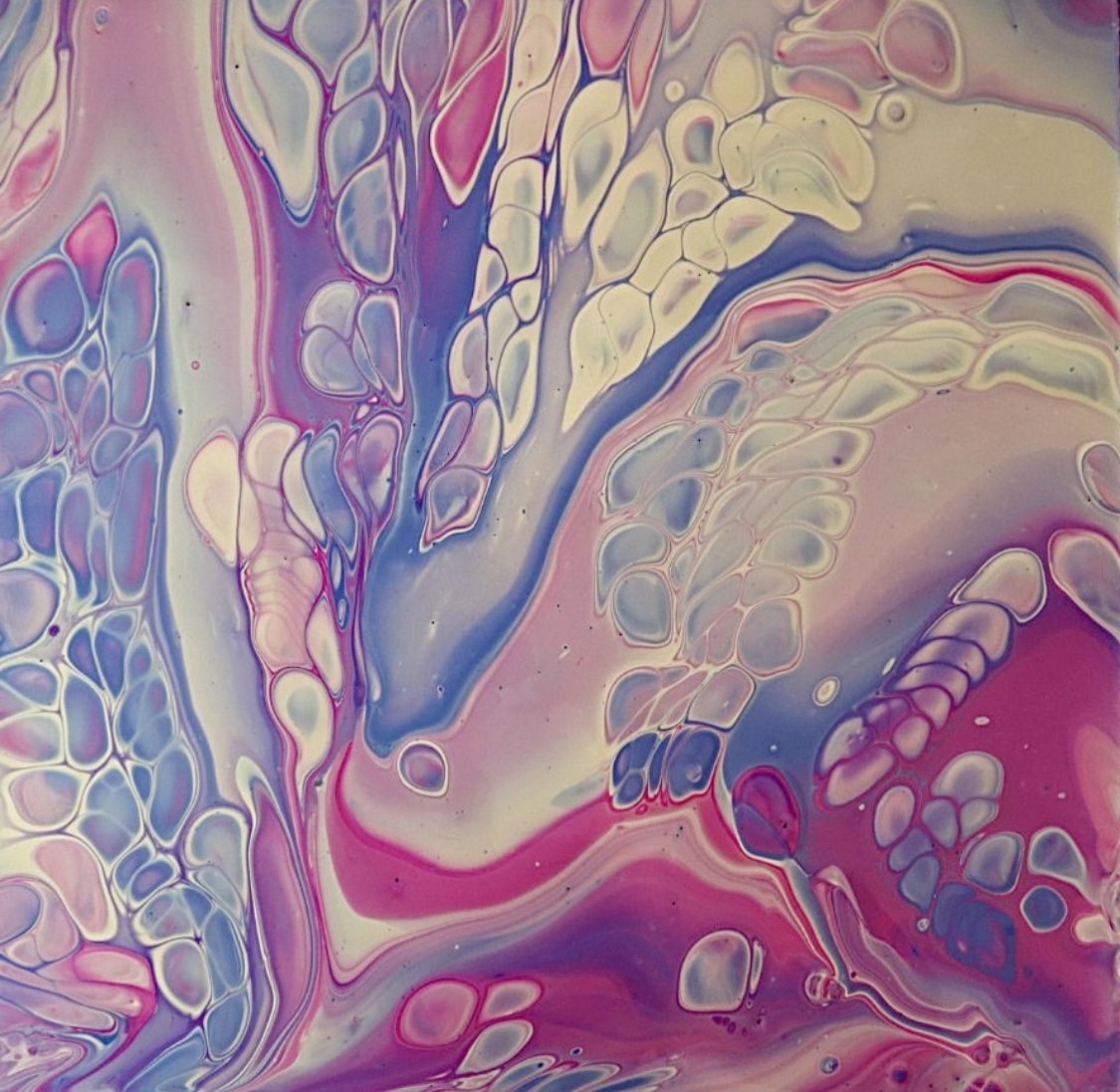
Choosing art for a doctor's office is not the same as decorating a living room. The people who sit in front of your walls are often worried, sometimes in pain, and almost always waiting. What hangs there will be looked at for longer, and more closely, than any painting in a private home. This guide brings together what research says about art in clinical spaces and turns it into practical choices for a waiting room or a consulting room.
What research says about art in clinics
The best known study in this field is not about art at all. In 1984, the architect and researcher Roger Ulrich published a paper in Science comparing patients who had undergone gallbladder surgery in a Pennsylvania hospital. Twenty-three patients whose window looked onto trees were matched with twenty-three whose window faced a brick wall. The tree-view group left hospital sooner, around 7.96 days against 8.70, received fewer strong painkillers between the second and fifth days, and drew fewer negative comments in the nurses' notes.
Later work moved from windows to walls. In a study funded by the Center for Health Design, Upali Nanda and Kathy Hathorn added canvas art and nature imagery to the emergency waiting rooms of two trauma centres in Houston. After the change, restless behaviour such as pacing and getting up from seats fell significantly at both sites, people stared at each other less, and the average noise level dropped by about six decibels.
A third study, by Nanda and colleagues in a psychiatric unit, compared a realistic nature photograph with an abstract-representational painting and a chaotic, non-representational abstract piece. Only the nature photograph was linked to a significant drop in as-needed anxiety medication. The authors' broader conclusion is worth keeping in mind: some art is better than no art, and the choice deserves care.
None of this means a painting can treat anyone. It does suggest that what patients see while they wait affects how they wait.
Choosing the subject: calm, legible, close to nature
The research points in a consistent direction. Images that read as natural, ordered and calm tend to help. Images that feel chaotic, aggressive or hard to decode can unsettle people who are already anxious.
In practice, that means:
- Prefer forms the eye recognises as living or natural: landscapes, water, plants, organic structures.
- Avoid violent contrasts, jagged compositions and subjects that suggest danger or illness in a raw way.
- Choose pieces that reward a long look. A patient may sit in front of the same wall for twenty minutes. Detail, depth and slow discovery are an advantage.
This is also why scientific imagery works so well in medical settings. A field of cells, the branching of an airway or the curve of a nebula reads as nature, even when the painting is abstract. It is ordered, it is alive, and it gives the mind something to explore.
Waiting room or consulting room: two different jobs
A waiting room needs art that lowers tension for many people at once. Larger works, softer palettes and one strong focal point usually do better than a crowd of small frames. Blues, greens and gentle pinks are safe choices. Place the main work where most seats can see it, not behind the reception desk.
A consulting room is more personal. It is where you sit with one patient at a time, and the art says something about you and your practice. Here you can choose a piece with more character, as long as it stays calm. Many practitioners like a work that connects quietly to their field, something a patient can ask about and a colleague will recognise.
Practical points before you buy
- Height: hang the centre of the work at roughly 145 to 150 cm from the floor, the usual eye level used in galleries. In a waiting room where everyone is seated, you can go a little lower.
- Size: for a wall above a row of chairs, aim for a work about two thirds of the width of the furniture beneath it.
- Light: avoid direct sun on the canvas. A varnished acrylic painting resists fading well, but strong daylight all year is never kind to colour.
- Cleaning and hygiene: varnished paintings can be dusted with a soft dry cloth. In clinical areas, check your own infection-control rules before hanging anything near an examination table.
- Budget and invoicing: an original can be invoiced to your practice or company. In France, companies that buy original works by living artists may qualify for a tax deduction under article 238 bis AB of the tax code. Rules depend on your legal structure, so check with your accountant before relying on it.
Art that speaks your specialty
The paintings in my Microcosm series were not designed as medical illustrations. They are fluid acrylic works in which cells and tissue appear on their own, as layers of paint of different densities settle and part. Many of them, though, look strikingly like what doctors see every day under a microscope, and they can be matched to a specialty:
- Cardiology: Myocardium, magenta bands running like muscle fibres.
- Pulmonology: Alveoli, the calmest painting in the series, soft blue and rose cells branching like airways.
- Haematology: Erythrocytes and Haemoglobin, red cells drifting through violet plasma.
- Dermatology: Epithelium, coral and lilac layers stacked like the strata of skin.
- Pathology: Tissue Section, in the palette of an H&E stain.
- Oncology and genetics: Mitosis, one tissue seen at two stages.
- Microbiology: Colony, close to colonies spreading across a plate.
Several of these paintings, including Myocardium, Tissue Section, Mitosis and Colony, have already joined private collections. Alveoli, Erythrocytes, Haemoglobin and Epithelium are available today, and a new work in the same spirit can be commissioned for any specialty.
For astrophysicists, radiologists who love the night sky, or anyone who wants a work that feels vast rather than close, the Macrocosm series takes the same physics out to the scale of stars, with paintings such as Event Horizon and Supernova. Supernova is still available; Event Horizon is in a private collection.
You can see all nineteen works, with sizes, prices and availability, in the paintings gallery. Available originals start at €6,400, and each one comes with a signed certificate of authenticity.
Make the choice with your patients in mind
The right painting for a doctor's office is the one your patients will be glad to look at on a hard day. Start from calm, choose something with enough detail to hold attention, and, if you can, pick a work that says something true about what you do.
If one of the paintings speaks to your practice, send an enquiry from the gallery and I will reply personally with close-up photographs, a short video in natural light, and advice on size and placement. To hear about new paintings and articles, you can also join my letters.