Search for an #EndSARS novel and you will find a lot of reporting, a lot of academic papers, a few documentaries and songs, and surprisingly little fiction. Six years after the protests of October 2020 and the shooting at the Lekki toll gate, the movement has been studied, filmed and sung far more often than it has been told as a story.
That gap is worth looking at. Novels take time, and the events themselves are still disputed. But some writers have already answered, in poems, in a comic, in essays, and older Nigerian novels had described the same violence long before the hashtag existed. Here is a guide to what you can read today.
If you need a reminder of what happened, I wrote about it last week in #EndSARS, six years on.
The short answer
Yes, but very few. The first literary responses to #EndSARS were short forms: poems written during the protests, a short comic story published a few months later, and personal essays collected five years on. Full-length novels that put October 2020 at their centre are still rare, and Echoes of Hope is one of them.
The first #EndSARS writing: poems, a comic, essays
Sọ̀rọ̀sóke: An #EndSARS Anthology, edited by Jumoke Verissimo and James Yékú (2022)
The title means "speak up" in Yoruba, and it was one of the words of the protests. The anthology began as a live archive: while the demonstrations were still going on in October 2020, Brittle Paper published poems about them as they were written. Those poems, by 32 poets including Gbenga Adeoba, Yejide Kilanko, Rasaq Malik and Kola Tubosun, were then gathered into a book published in Ibadan by Noirledge in 2022.
It is the closest thing to a first-hand literary record of those weeks: written in the heat of events, by people who were watching, marching or grieving.
"A Luta Continua", Nnedi Okorafor (2021)
The Nigerian-American author of Binti wrote a short Venom story for Marvel's anthology Marvel's Voices: Legacy #1, published in February 2021. It is set on 20 October 2020, the night soldiers fired on protesters at Lekki. Okorafor said it was "a little therapeutic" to imagine what would have happened if Venom and her character Ngozi had been there.
It is only a few pages long, but it is a striking choice: a mainstream American comic putting the Lekki toll gate on its pages a few months after the shooting.
Who Gave the Order? A History of a People's Movement, edited by Chibueze Darlington Anuonye (2025)
This is not fiction, but any reader interested in how October 2020 felt from the inside should know it. Published by Masobe Books, it gathers thirteen essays by Nigerian writers, among them Ukamaka Olisakwe, TJ Benson and Abubakar Adam Ibrahim. The title repeats the question protesters and families kept asking after Lekki, and that has still not been fully answered.
The essays go beyond Lagos. The editor's introduction describes the protests in Owerri, and several contributors write about who was left out of the movement's demands for freedom.
Why the novel takes longer
A poem can be written the same night. A novel needs distance: time to understand what happened, to invent characters who are not simply the real people, and to find the shape of a story that does not end with the news.
There is also the problem of truth. Six years on, the number of people killed at Lekki is still contested, the Lagos State judicial panel and the federal government still disagree, and many families are still waiting for answers. Writing fiction about events that are officially denied asks for care: the novelist has to invent without lying.
That is why the novels that come closest to #EndSARS are, for now, often the ones written before it.
Novels that saw it coming
Long before 2020, Nigerian novelists were writing about uniformed men who answer to no one, and about young people who refuse to stay silent. These three books do not mention #EndSARS, but they explain where the anger came from.
GraceLand, Chris Abani (2004)
Elvis Oke, a teenager in Lagos in 1983, dances as an Elvis impersonator and drifts into ever more desperate work to survive. Over him stands the Colonel, a corrupt and violent officer who controls the city's security. Near the end, a slum resists its demolition and only the presence of foreign journalists prevents a massacre. Read today, that scene feels very close to Lekki. The novel won the Hemingway Foundation/PEN Award.
Waiting for an Angel, Helon Habila (2002)
Lomba is a young journalist imprisoned under General Abacha's military rule. In his cell he secretly writes poems and letters. When they are discovered he is put in solitary confinement, and then the prison director, in love with a young teacher, asks him to write poems for her. It is a novel about what words can do against force, and it won the Commonwealth Writers' Prize for Africa in 2003.
Every Day Is for the Thief, Teju Cole (2007)
A young man returns to Lagos for a month after fifteen years in New York and walks the city with fresh eyes. The book moves in short scenes, between the energy of Lagos and its everyday corruption and violence, without nostalgia and without easy anger. It helps readers outside Nigeria understand the daily life that SARS preyed on.
Chronicles from the Land of the Happiest People on Earth, Wole Soyinka (2021)
Soyinka's first novel in nearly fifty years came out in September 2021, a year after the protests. It is not about #EndSARS: it is a satire of a corrupt, imaginary Nigeria, where a surgeon uncovers a trade in human body parts run by the powerful. But it shares the movement's fury at impunity, and at the time of its publication Soyinka said that the energy and intelligence that created #EndSARS could help get the country back on track.
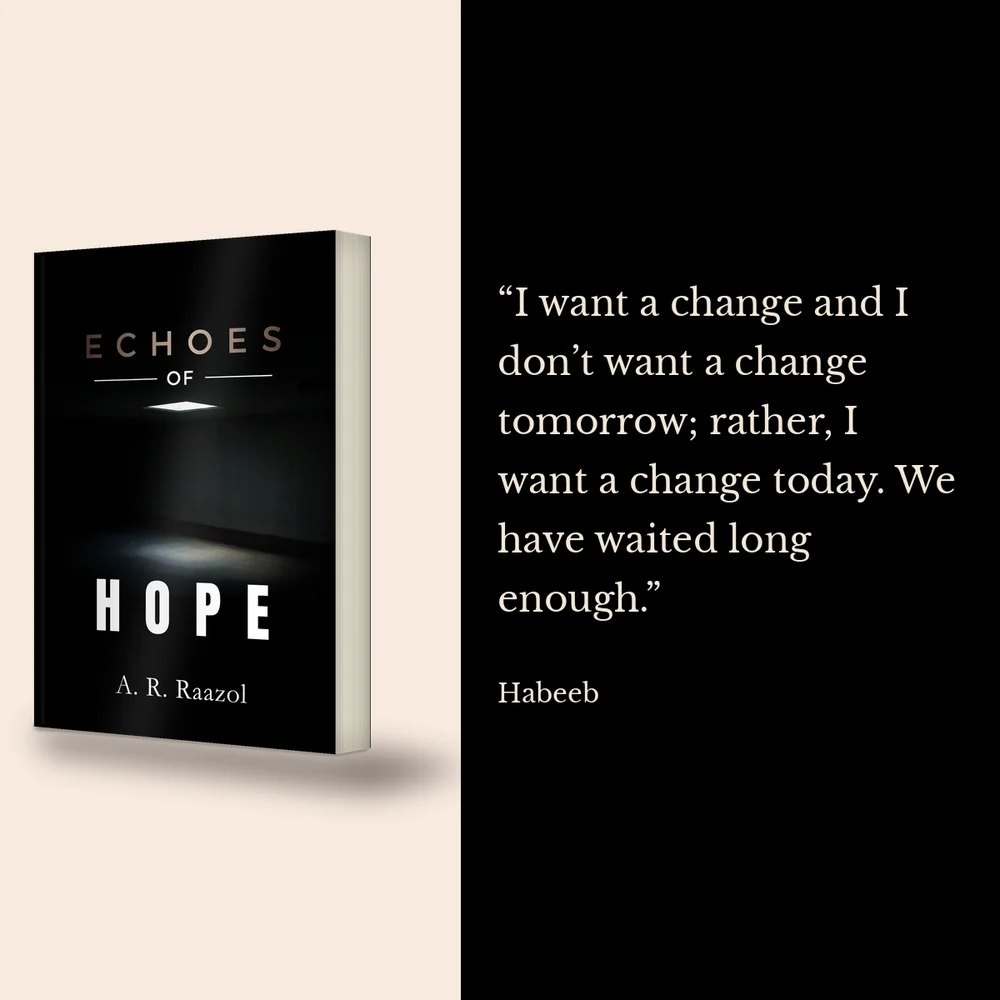
A novel set in October 2020: Echoes of Hope
Habeeb Ajao walks out of a Paris prison in the summer of 2020, cleared after four years of a crime he did not commit. He leaves for Nigeria, his father's homeland, and finds a family that rejects the Frenchwoman he loves, a police force that shoots first, and a generation rising up under one cry: #EndSARS.
Echoes of Hope is fiction, and its characters are invented. But they live through those weeks: the anger, the hope, the songs, the night at Lekki. I began writing it in November 2020, only weeks after Lekki.
I want a change and I don't want a change tomorrow; rather, I want a change today. We have waited long enough.
You can read the first pages of Echoes of Hope on this site, see the book and its formats, or find it on Amazon.
Where to start
- To hear the protests in their own words: Sọ̀rọ̀sóke.
- To understand how it felt from the inside: Who Gave the Order?
- To see where the anger came from: GraceLand and Waiting for an Angel.
- For a novel that lives inside October 2020: Echoes of Hope.
I am sure this list is incomplete. If you know a novel or a story about #EndSARS that I have missed, write to me through the contact form. I will add the best suggestions here, and subscribers to my letters will hear about them first.